This website does not cater to a British audience. If you are visiting this website from the United Kingdom, kindly leave this site without delay.

Best cryptocurrency wallets for BTC, LTC, ETH

Are you looking to purchase cryptocurrency but unsure about the best way to store your coins? Here is a compilation of recommended wallets by Coinsdrom.

Although there are numerous wallets available, security is of paramount importance when it comes to safeguarding your digital assets. Hardware wallets are preferred as they keep your coins offline and provide optimal security. For long-term crypto investors, we strongly endorse Trezor and Ledger as reliable options to store your coins securely.

However, a hardware wallet might not be the most convenient option for users new to the cryptocurrency world. This is where software cryptocurrency wallets prove to be helpful. Coinsdrom advises utilising software wallets for storing and spending, as they do not compromise security and give you complete control over your private keys. Several reliable, efficient, and convenient software wallets are available, and we have listed our recommended ones below.

Bitcoin wallets

Our recommended wallet for storing and spending your bitcoins is Electrum, which is reliable and user-friendly.
Electrum, known for its simplicity and security, is an excellent option for newcomers. It is compatible with Windows, Linux, OSX, and Android operating systems, making it accessible to many users.

Litecoin wallets

For Litecoin users, Coinsdrom recommends Electrum-LTC and Litewallet as secure and easy-to-use options.

Electrum-LTC is a forked version of the original Electrum wallet and boasts similar levels of simplicity and security. It can be installed on Windows, Linux, and OSX operating systems.
Meanwhile, Litewallet is the first standalone Litecoin wallet developed for iOS by the Litecoin Foundation. It prioritises accessibility, security, and simplicity, making it an ideal choice for beginners.

Ethereum wallets

Our recommended wallets for storing Ethereum-based ERC20 tokens funds include MyEtherWallet, MetaMask.

MyEtherWallet is the most popular Ether wallet capable of storing ERC20 tokens. It can be accessed via the web or imported into another wallet conveniently.

MetaMask is a highly user-friendly wallet that integrates with popular web browsers. This makes it extremely convenient to store and move your tokens around. It can also be opened from MyEtherWallet.

IMPORTANT: It’s crucial to remember to back up your wallet and safeguard your private keys from unauthorised access. Additionally, keeping your funds on exchanges for extended periods is not recommended due to the prevalence of exchange hacks in recent years. It’s best to follow secure practices to keep your coins safe, and numerous guides available online can assist you in doing so. Remember, it’s better to be safe than sorry when securing your digital assets.

Investing in crypto-assets: how to limit the risk of being exposed to fraud

In 2017, thousands of investors in over 175 countries found themselves with empty pockets after having invested nearly US$4 billion in a cryptocurrency called “OneCoin.” The mastermind behind the project, Ruja Ignatova, vanished with what is believed to be the entire amount missing.

This news item struck a nerve in the cryptocurrency world. The BBC even devoted a podcast to it. And while this case was large-scale fraud, the fact remains that fraudulent schemes are frequent in the world of crypto-assets, including cryptocurrencies (such as Bitcoin) and non-fungible tokens (NFTs). Possession of these tokens grants investors rights that can take different forms (either access to a good — like a work of art — a service, or something similar to owning a stock).

An alarming amount of fraud

A 2018 report from a crypto-asset firm estimates that nearly 80 per cent of all initial coin offerings (ICOs) launched in 2017 — such as the issuance of new cryptocurrencies — were fraudulent. Of course, it is impossible to accurately measure the number of yearly frauds because most are not reported to the relevant authorities. However, this alarming figure should still raise questions for potential investors about managing the risks they are taking.

It should be noted that crypto-assets are subject to little or no regulation worldwide. Regulatory bodies, such as Québec’s Autorité des marchés financiers and the Security and Exchange Commission in the United States, have been working on the subject for some time now, but regulation in certain areas is lagging. One reason is these investments’ decentralised and borderless nature makes developing and enforcing laws and regulations particularly difficult.

Traditional indicators of fraud

Investing in crypto-assets falls under the purview of finance technology, commonly referred to as FinTech. The tools for investing in FinTech diverge significantly from those of traditional finance. Investors in FinTech are often driven by the search for quick gains, bordering on speculation.

The fact remains that signals of fraud — which have existed for a very long time in traditional finance, such as stock market investments — are also present in FinTech. One only has to think of promises of incredible returns far beyond what regulated markets generate. Or the pressure some financial product promoters place on investors to act quickly pushes investors to put their money without taking time to think through their decision.

Investors feel this urgency mainly when a promoter plays on their fears of missing an incredible investment opportunity. This incites them to put their money down quickly to beat others to the chase. A parallel could be drawn with promotions for products in stores that sell at cut-rate prices while claiming that quantities are limited. However, in the case of investing, this often turns out to be a fraudulent scheme rather than an attractive opportunity.

Explanatory documents, not regulatory documents

The technological aspect of crypto-assets means that new fraud indicators have emerged in their wake. Since these differ from what investors are used to hearing from those responsible for informing them about risks — including investment advisors — investors must pay close attention to the projects they are considering investing in.

Indeed, the absence (or near absence) of regulation means that, for the time being, investors are solely responsible for protecting themselves against fraudulent schemes in the industry. Some investment funds offer cryptocurrency exchange-traded funds. But the fact remains that these investments carry a risk of volatility.

As in the case of traditional investment, the teams behind the ICO publish what is called a “white paper.” Similar to a prospectus for a public offering — when a company raises additional funds through a stock offering, for example — this document provides the potential investor with a wealth of information about the proposed project. Among other things, it explains how the project works and who the team is behind it.

However, the similarities with prospectuses end there because, unlike the latter, white papers are not regulated. An issuer can therefore show what it wants and omit information that could prove helpful to a potential investor.

It is important to note that anyone can issue a white paper for most projects. But regulators strongly recommend that the entity in question be registered to build confidence with potential investors and, more importantly, ensure that the rules are followed.

New signals of fraud

There are new signals of fraud that are unique to crypto-assets. We have seen white papers containing elements that contradict each other, contradictions, or even errors in the name of a company behind a project. Some white papers are copied from other projects and quickly revised, leaving behind typos. Generally, an ICO is a unique project, and a copy usually signals a fraudulent project.

Another indicator of potential fraud is a white paper in which specific passages are too complex to read easily. This should prompt the potential investor to question the project’s seriousness. The primary purpose of a white paper is to inform an investor, so abstruse language should never be used for projects being presented as coherent.

Moreover, because of the technological complexity of the work involved, the team behind the project is especially essential to its success. So if the project documentation does not include a description of the team, whether in the white paper or on its website, this absence should raise questions in an investor’s mind.

It is usually relatively easy to contact the ICO team to ask questions or obtain additional information about the project, which is not the case in traditional finance. If a potential investor cannot contact the team, there is reason to question the project’s seriousness.

Encountering any of the fraud signals discussed above does not necessarily mean a project is fraudulent. However, recognising these signals will make an investor better equipped to manage the fraud-related investment risks that are particularly prevalent in the crypto-asset ecosystem.

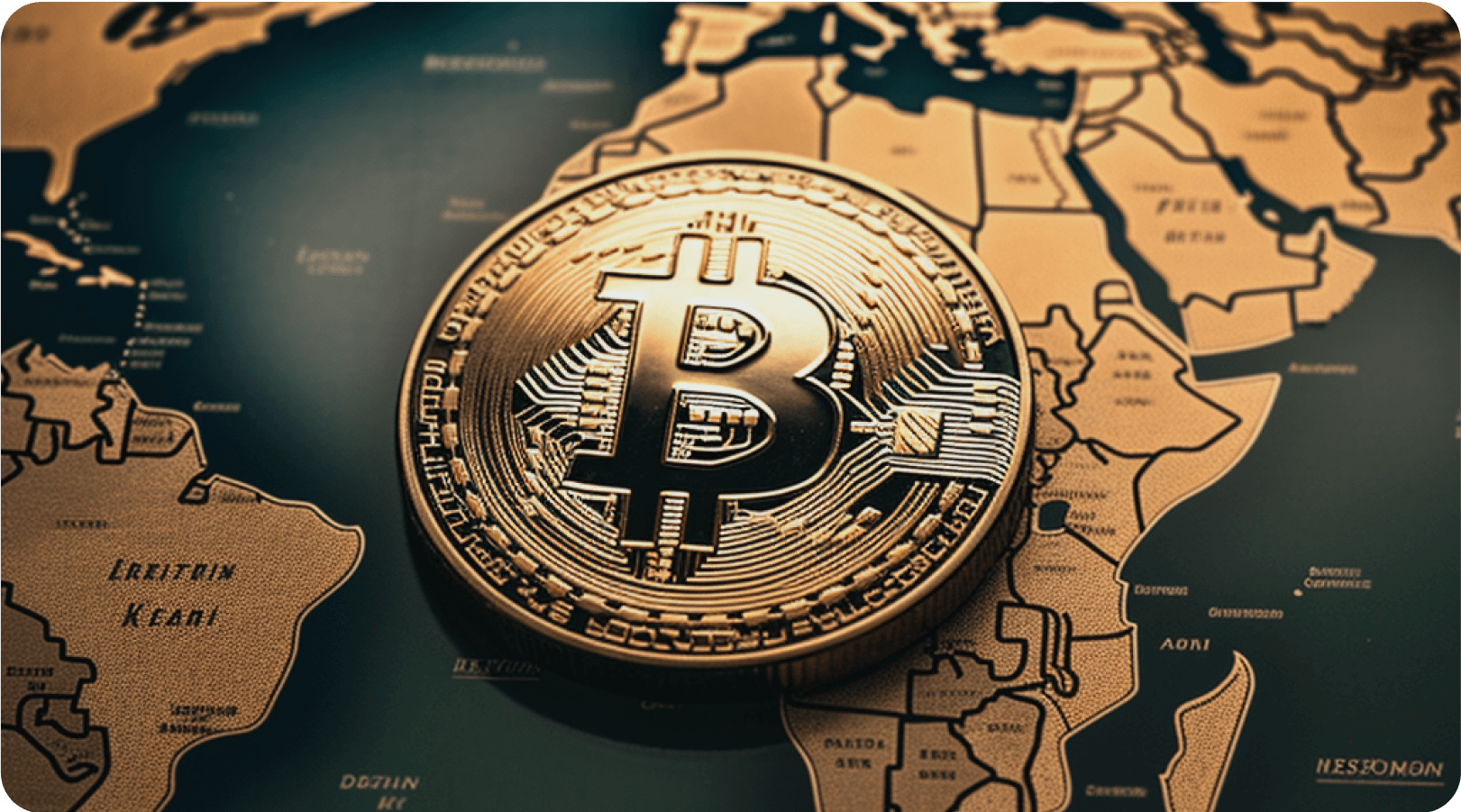
Cryptocurrencies are gaining ground across Africa.That’s both good news and bad! Why?

Cryptocurrencies have become popular in Africa and other developing countries. That’s according to a policy brief released recently by UNCTAD, a United Nations agency. Significant proportions of Kenya’s (8.5%), South Africa’s (7.1%), and Nigeria’s (6.3%) populations are using these digital currencies. In June, the Central African Republic adopted Bitcoin as a legal tender.

The report warns that widespread unregulated digital currencies threaten the continent’s financial system. In an interview with The Conversation Africa, Iwa Salami, an expert in financial technology law and regulation, examines the future of digital currencies in Africa.

Why is cryptocurrency becoming popular in Africa?

Cryptocurrencies have gained acceptance among a large proportion of the low-income population previously financially marginalised. Most banks in Africa were not accessible to this segment. Even when they were, low-income account holders were discouraged by high transaction costs.

Another factor is economic stagnation compounded by debt crises and political instability in African economies since the era of independence. This has resulted in weak currencies ravaged by inflation in countries like Kenya and Nigeria.

Cryptocurrencies promised to address both financial exclusion and the problem of weak domestic currencies.

Cryptocurrency allows everyone with access to a mobile device and internet connectivity to engage in activities similar to those conducted through financial institutions and intermediaries. That includes payments, sending remittances, and making investments.

Investment is particularly inviting to the technically savvy. It allows them to hold assets unaffected by rising inflation and depreciating domestic currencies.

Cryptocurrencies are quicker, cheaper, and easier to use than conventional methods. That’s because the technology facilitates peer-to-peer transactions rather than relying on intermediaries. These currencies were more accessible than traditional banks during the pandemic and lockdowns. This further drove their use and growth across Africa.

What does a high number of people holding cryptos imply?

This can facilitate economic activity in African countries. People without access to banks and banking services can use cryptos to pay for goods and services.

Crypto transactions are also believed to be a more secure way of transacting. Unless someone gains access to the private key for your crypto wallet, they cannot sign transactions or access your funds.

The system also facilitates transparency. All cryptocurrency transactions take place on the publicly distributed blockchain ledger. Some tools allow anyone to look up transaction data – including where, when, and how much of a cryptocurrency someone sent from a wallet address.

But there are risks, too. What are those?

First, cryptocurrencies are very complex. They require a bit of technological astuteness to embrace. A significant proportion of the adult population in sub-Saharan Africa (34.7%) is illiterate and may be unable to grasp it. To a certain extent, this turns the financial inclusion argument on its head.

Secondly, although it is argued that the blockchain is a more secure way of transacting, the downside is that losing your private key means no way to recover your funds. This threat does not exist if you have a bank account.

Thirdly, cryptocurrencies have had a history of volatility (as is currently being experienced in the crypto market). This has adversely affected retail investors, especially those who do not understand this type of asset class.

Another issue of profound concern to African states is the potential threat to monetary sovereignty. Should crypto ever be more widely used than domestic fiat currency, national economic agencies such as central banks may not use monetary policy to steer their economies to a growth path. Such policy is, after all, primarily administered through domestic currencies.

An associated threat is the weakening of adequate capital controls in African states. These are needed to prevent capital flight from domestic economies. Any decline can result in significant volatility in currency rates and the rapid depreciation of domestic currencies.

There are also threats to financial stability. This could arise from significant exposure that financial institutions, like banks, have to crypto firms, such as through loans. Regulation in some African countries, such as Nigeria, addresses this by restricting transactions between banks and crypto assets service providers.

What is the future of cryptocurrencies in Africa?

Despite the ongoing downturn in the market, cryptocurrency represents the future of finance and financial transactions. And there are indications that cryptocurrencies are here to stay, which is seen from their increasing recognition by countries. At one extreme, the governments of El Salvador and the Central African Republic have adopted Bitcoin as a legal tender. 

However, the implementation and impact on their broader economies have been severely criticised. Others, such as Nigeria, have recognised the need for state representation of digital currencies in the form of central bank digital currencies. Many other countries are now exploring this option.

It is essential to note that the uptake of central bank digital currencies has been very low in developing countries that have rolled them out. Countries also have ongoing investigations into the economic impact of central bank digital currencies and whether adoption is the right approach.

But suppose cryptocurrencies are to live up to their promise on the African continent and elsewhere. In that case, there must be a globally coordinated and holistic approach to regulation since transactions are global. Although some action on this front is emerging, the current fragmented approach to regulation worldwide is not ideal.

CRITICAL ALERT

Restricted Service Availability for Retail Clients in the UK. Please note that the services provided on this platform are presently unavailable to Retail Clients residing in the United Kingdom.